Ganbatte Means Go: How Our Kids Are Accidentally Becoming Bilingual on the Soccer Field
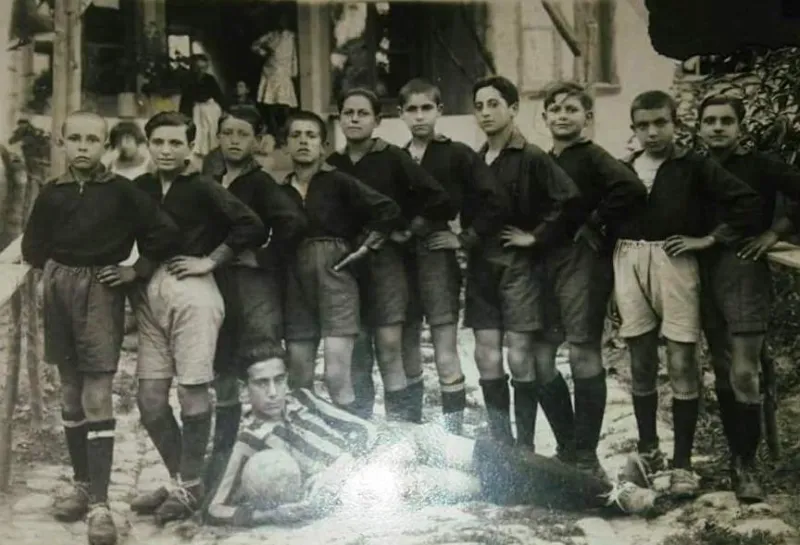
Photo: Unknown authorUnknown author, Public domain, via Wikimedia Commons
Here's a thing that happened last Saturday: a nine-year-old, mid-water-break, counted her team's sprints out loud. 'Ichi, ni, san, shi...' She didn't stop at four. She went all the way to ten, then looked around like she'd done nothing remarkable at all.
Because to her, she hadn't. That's just how we count reps at FC Tokyo Park.
Nobody Took a Placement Test
We want to be clear about what this isn't: this isn't a Japanese immersion program wearing a soccer jersey. No flashcards. No homework. No kid has ever been quizzed on vocabulary before a scrimmage.
What it is is the natural side effect of a club where half the coaching staff grew up between two languages. When Coach Daichi yells 'hayaku!' during a transition drill, he's not teaching Japanese — he's coaching. The Japanese just happens to be the fastest word out of his mouth. And kids, being the ruthless efficiency machines they are, absorb whatever gets them to the ball faster.
'American kids hear a word maybe three times and they own it, if the word matters to the game,' Daichi told us. 'They don't care that it's a foreign language. They care that it means move faster.'
The Words That Stuck
Every club has its own dialect. Ours has drifted bilingual, and the vocabulary that survived is almost entirely words that do something on the field:
- Ganbatte (do your best / go get it) — our all-purpose halftime rallying cry. If you've heard our sideline, you've heard this one.
- Hayaku (faster) — usually the first word a new player learns, usually in the first ten minutes.
- Mou ikkai (one more time) — the sound of a coach who isn't done with a drill yet.
- Yoshi! (alright!) — the celebration word. It travels. We've heard opposing teams' kids say it by the end of tournaments.
- Ichi through juu (one through ten) — the counting thing. Reps, passes in a sequence, minutes left in a small-sided game.
Notice what's missing: nothing academic. No colors, no weather, no polite phrases for ordering food. The lexicon of the locker room is verbs and urgency. It's language as a tool, which is honestly how most languages get learned anyway.
'Mom, What's Ganbatte?'
The funniest part of this whole phenomenon is watching it leak into households. Parent and club volunteer Rachel Nguyen says her son, a U-10 midfielder, started narrating everything in a mash-up of English and Japanese.
'He counts stairs in Japanese. He says yoshi when he beats his brother to the car. Last month he told his grandmother to ganbatte on her diet,' Rachel laughs. 'She thought he was sick. We had to explain it's a soccer thing.'
It's a soccer thing that a lot of parents have quietly gotten curious about. So here's the starter kit — the same mini-glossary our coaches hand out at the beginning of each season, the one that fits on a single index card:
| Term | Meaning | When you'll hear it |
|---|---|---|
| Ganbatte | Do your best | Halftime, close games, everything |
| Hayaku | Faster | Transitions, always |
| Mou ikkai | One more time | Drill resets |
| Yoshi! | Alright! | Goals, wins, good passes |
| Otsukare | Good work / you're spent | End of practice, said with a fist bump |
That last one, otsukare, might be our favorite. There's no clean English translation — it's what you say to someone who just put in honest work. Our coaches say it at the end of every session, and the kids have started saying it to each other without prompting. If you want to know whether a club culture is actually landing, listen for the words kids use when adults aren't listening.
Why It Matters More Than We Expected
We'll be honest: when the club was founded, bilingual coaching was a matter of who was available, not a pedagogical strategy. But a funny thing happened on the way to the U-12 season. Kids who'd never been exposed to a second language discovered that learning one is possible — that it's not a school subject where you get graded, but a thing humans just pick up when the stakes are a goal in the last minute.
A couple of our older players have started asking Coach Daichi for more. What's 'pass'? What's 'defender'? One U-14 player showed up to tryouts with a language app on her phone because, in her words, 'I want to know what they're saying about me.'
That's the unexpected gift of our bicultural identity. The soccer brought them in. The words — a few dozen of them, shouted across 60 yards of grass — gave them proof that another language isn't a wall. It's just another way to yell 'go!'
And if a nine-year-old counts her sprints in Japanese and thinks nothing of it? That's not a lesson plan. That's just Tuesday at the Park.