Slow Soccer in a Fast-Food World: The Quiet Revolution Happening at FC Tokyo Park
Photo: Nationaal Archief, No restrictions, via Wikimedia Commons
There's a moment that happens at almost every FC Tokyo Park youth practice, and if you're new to the club, it can be genuinely confusing to watch.
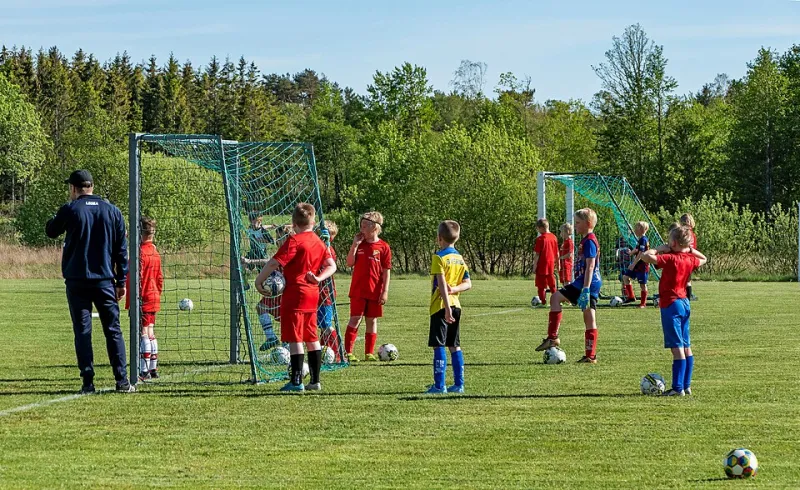
A nine-year-old wins the ball near midfield. Every parent in the bleachers leans forward. The kid takes two touches, scans the field, and then — instead of launching a hopeful ball up the pitch — turns and plays it calmly back to a defender.
Nobody groans. The coaches clap. And somewhere in the crowd, a parent who grew up on Sunday rec league soccer whispers, "Did that kid just pass backwards on a breakaway?"
Yes. Yes, they did. And that's the whole point.
What We Stole From Setagaya
FC Tokyo's academy in Setagaya, a quiet ward in western Tokyo, has spent decades perfecting a philosophy that can be summed up in three words: keep the ball. Their J.League youth sides are famous for suffocating possession, relentless positional discipline, and players who seem to have the entire field mapped behind their eyes before they receive a pass.
When our coaching staff built the FC Tokyo Park curriculum, that DNA was the blueprint. But transplanting a Japanese academy model onto American soil — where most of our kids grew up watching NBA fast breaks and NFL two-minute drills — required some serious adaptation.
"American kids want to go forward. Always. Immediately," says Coach Marcus Delgado, who runs our U-11 program. "The first six weeks are basically therapy. We're unlearning the panic. In Tokyo, patience is cultural. Here, we have to teach it like a skill, like juggling."
The Drill Swap: Tokyo Version vs. Park Version
The clearest window into this translation project is the rondo — soccer's version of monkey-in-the-middle, played in a tight circle where keepers of the ball must survive aggressive pressure.
The Tokyo classic: 4v1 rondo, one-touch limit, and a brutal consequence system. Lose the ball, you're in the middle. The circle is small. The pressure never lets up. It's a furnace, and it forges technicians.
The Park adaptation: We widen the circle. We allow two touches for our youngest age groups. And here's the part that would make a Setagaya coach wince — we let the defender back out after three successful passes, so the same kid isn't stuck in the middle getting demoralized.
"We softened the emotional hit," Delgado explains. "Japanese academies can be hard on kids because the culture supports it. American kids, if they're not having some version of fun, they quit in a month. So we kept the technical core and rebuilt the wrapper."
Same furnace. Lower flame.
What Translates Perfectly
Not everything needed adjusting. Some elements of the Tokyo method landed here like they were designed for it.
Silent scrimmages. Coaches stay quiet during small-sided games, forcing players to communicate and solve problems themselves. Turns out American kids, once they get over the shock of a coach who won't just bark instructions, absolutely thrive on this. It builds the scanning habit — that constant head-checking that separates good players from great ones.
Positional rotation in training. Tokyo academies rotate everyone through every position, including the keeper. Our parents initially hated this. "My daughter's a striker!" Then they watched their striker learn to defend, and their defender learn to attack, and suddenly the team started playing like eleven brains instead of one brain and ten followers.
The post-match review. Not a lecture — a conversation. Players talk first, coaches second. It's the Socratic seminar model applied to soccer, and it might be the single biggest driver of our academy's improvement over the past two seasons.
What Didn't Survive the Flight Over
Honesty time: some of the Tokyo model just doesn't work here, and pretending otherwise would be doing our families a disservice.
The year-round, near-daily training schedule is the big one. Japanese academy players can train six days a week because the school system, the transportation infrastructure, and the cultural expectations all align around it. Our kids have homework, carpools, and — you know — childhoods. We compressed the volume and raised the intensity per session instead.
The hierarchy thing didn't translate either. Japanese academies run on seniority and formality. Our clubhouse runs on high-fives and snack duty sign-up sheets. Different energy, honestly fine.
And the win-at-all-costs suppression? We kept the spirit but not the rigidity. Tokyo academies will sometimes accept losing a season to build something long-term. American youth soccer has tournaments, trophies, and a whole industrial complex built around winning now. We split the difference: development-first in the fall, compete-hard in the spring.
The Proof Is on the Pitch
Here's what all this looks like when it works. Last month, our U-13 side played a regional final against a team that was bigger, faster, and more athletic across the board. On paper, we lose that game 4-0.
Instead, the kids strung together passing sequences that lasted ten, twelve, sometimes fifteen passes. They didn't panic under pressure. They didn't boot the ball and hope. They played — patiently, deliberately, together — and won 2-1 on a goal that started with our keeper and traveled through seven players before hitting the net.
The opposing coach came up afterward and asked where we import our players from.
We don't import them. We grow them, one backwards pass at a time, right here on our own patch of turf. Setagaya taught us the philosophy. America taught us how to package it. And the kids? The kids are proving it works.