Headlights, Flashlights, and Guts: The Semi-Final Nobody at FC Tokyo Park Will Ever Forget
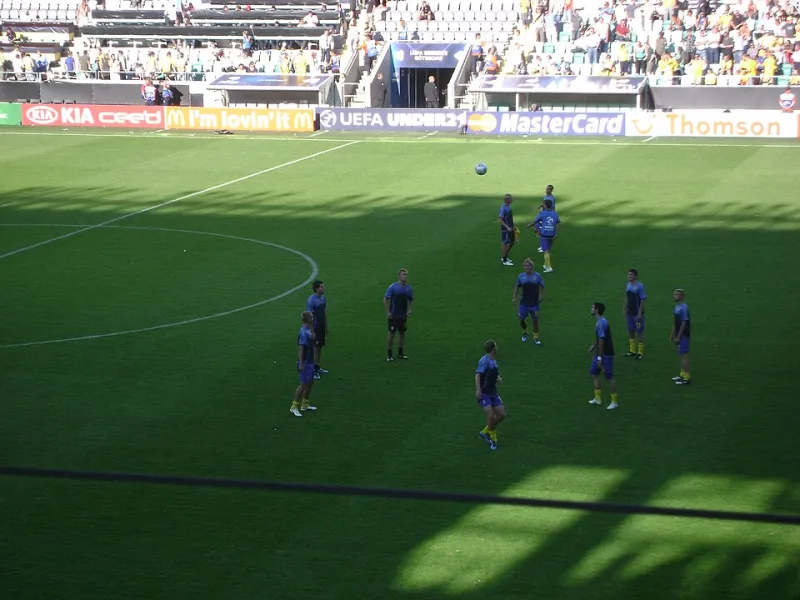
Photo: J 1982, CC BY-SA 3.0, via Wikimedia Commons
Every club has one story that gets told until everyone can recite it by heart. For FC Tokyo Park, it happened on a humid July night under a sky that went dark in more ways than one.
The Setup: One Kick From the Final
The Regional Summer Classic had already been a grind. Our U-12 boys had scraped through the group stage on a tiebreaker, edged a feisty squad from Ann Arbor in the quarterfinals, and by 8:40 PM found themselves locked 1-1 in the semifinal against a well-drilled club from the other side of the state. Extra time solved nothing. Penalties, then.
The kids gathered near the center circle while the refs marked the shootout order on a clipboard. Parents crowded the fence line. Somebody's grandmother had brought a thermos of barley tea, because of course she had.
Then the floodlights flickered once, hummed, and died.
Blackout
Not just our complex. The whole grid — three counties, as we'd learn later. A transformer failure somewhere up the line knocked out streetlights, traffic signals, and every ounce of visibility on a pitch that suddenly felt like the inside of a sock.
The referee called the match suspended. Players from both teams huddled with coaches. Parents pulled up car radios hoping for news. For about twenty minutes, the assumption was simple: the game would resume in the morning, or the result would stand, or the tournament would just pick a team and move on.
None of those things happened. Instead, someone had a worse idea that turned out to be the best idea.
The Lineup of Headlights
It started with one minivan. A dad from the other team — we won't name him, but he knows who he is — backed his vehicle up to the touchline and flipped on his high beams. Then a Tacoma followed suit on the opposite side. Within fifteen minutes, seven cars and trucks formed a lopsided ring of light around the penalty area, angled to kill shadows as best as imperfect headlamps can.
It wasn't regulation. It wasn't even close. But it was, technically, light.
Enter the tournament director, a retired high school athletic administrator named Ray Kowalczyk, who surveyed the scene, looked at the rulebook, looked at the headlights, and made the call that cemented his local legend: he invoked a little-used provision allowing the match referee to approve modified conditions with consent from both coaches. Both coaches said yes. Ray then did something even better — he asked the players if they wanted to finish.
Eleven and twelve-year-olds, standing in the dark, voted unanimously to shoot.
The Shootout by Flashlight
Here's where the details get fuzzy and the legend gets big, so we'll stick to what the footage confirms. Several parents recorded the whole thing on phones, and a few of those phones doubled as auxiliary lighting, held steady by older siblings with surprisingly good posture.
The opposing keeper saved the first attempt. Our keeper, a wiry kid named Deshawn, returned the favor two kicks later, diving to his left on a penalty that, by the grainy video, he had no business reaching. Kids who had been substitutes an hour earlier stood along the edge of the light, arms around each other, screaming encouragement in two languages — a mix of English and the Japanese phrases they'd absorbed from training without ever formally studying.
After eight rounds, it came down to the kind of moment youth soccer dreams up but rarely delivers: our smallest player, a midfielder who spent most of the season quietly winning balls nobody noticed, stepping up with the shootout on his foot. He took three steps back, waited for a car to adjust its headlights after a parent yelled "hold it steady!" — and buried it low to the keeper's right.
Final: the good guys, by a margin that felt like ten goals.
What Happened Next
The celebration was immediate and slightly chaotic — a dogpile in the glow of a Subaru's headlights, coaches crying, Ray Kowalczyk laughing so hard he had to sit on the ball bag. The final the next morning was played in full sunshine with full electricity, and we lost 3-1 to a very good team. Nobody cares. Ask anyone at the club about that weekend and they'll skip straight to the blackout.
Why This One Sticks
You could frame that night a dozen ways — resourcefulness, luck, a tournament director with a soft heart. But the version we keep coming back to is simpler: the game mattered more to those kids than the circumstances did. They didn't need a stadium. They needed a ball, a spot, and enough light to see the keeper's toes.
There's a word we borrow a lot around here — gaman, the idea of enduring something tough with patience and dignity. Twenty-two kids, a handful of headlights, and one bent-but-not-broken rulebook gave that word a whole new meaning at FC Tokyo Park.
The trophy sits in the display case at the clubhouse. The video lives on three separate parents' phones. And every preseason, when a new U-12 class comes through, someone makes sure they hear the story: the night the lights went out and the team didn't.


